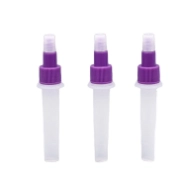

Extraction tubes sit at the most critical junction in diagnostic testing — they're the bridge between raw biological specimens and actionable results. Whether a lab is running RT-PCR for infectious disease screening or a pharmacy is dispensing rapid antigen tests for at-home use, the extraction tube is where sample preparation happens. Yet many procurement teams and clinic managers treat extraction tubes as commodity items, not realizing that tube design, buffer compatibility, and material quality directly impact test accuracy.
This guide walks through exactly how extraction tubes function in both PCR and antigen testing pipelines — from the moment a swab enters the tube to the final test result.
The Extraction Tube's Role in the Testing Chain
In any molecular or immunological diagnostic workflow, the extraction step serves three purposes: (1) release target analytes from the biological matrix, (2) stabilize those analytes in a compatible buffer solution, and (3) deliver a controlled volume of processed sample to the detection platform. The extraction tube is the physical vessel where all three steps converge. Poorly designed tubes can cause incomplete lysis, inconsistent drop volumes, or buffer leakage — any of which invalidates downstream results.
PCR Testing Workflow: Step by Step
Polymerase Chain Reaction (PCR) is the gold standard for detecting pathogen genetic material. Here's how extraction tubes participate in a typical RT-PCR workflow:
- Step 1 — Sample Collection: A nasopharyngeal or oropharyngeal swab is collected from the patient using a sterile flocked swab. The swab captures epithelial cells and any viral/bacterial particles present in the mucosa.
- Step 2 — Specimen Transfer to Extraction Tube: The swab is immediately placed into an extraction tube pre-filled with lysis buffer or viral transport medium (VTM). The tube must maintain specimen viability during transport — typically at 2–8°C for up to 72 hours.
- Step 3 — Cell Lysis and Nucleic Acid Release: The lysis buffer in the extraction tube breaks open cell membranes and viral capsids, releasing DNA or RNA into the solution. For silica spin column tubes, the lysate is then passed through a membrane that selectively binds nucleic acids.
- Step 4 — Purification: Wash buffers are passed through the spin column (via centrifugation at 12,000–17,000 rcf) to remove proteins, salts, and other inhibitors. The purified nucleic acid remains bound to the silica membrane.
- Step 5 — Elution: A low-salt elution buffer is added to the column, releasing the purified nucleic acid into a clean collection tube. This eluate is the PCR-ready template.
- Step 6 — PCR Amplification: The purified template is combined with primers, probes, and DNA polymerase in a PCR plate or tube, then placed into a thermal cycler. Real-time PCR monitors fluorescent signal accumulation over 35–40 cycles.
- Step 7 — Result Interpretation: If the target sequence is present, fluorescence crosses the detection threshold (Ct value). Lower Ct values indicate higher viral/bacterial load.
Why Tube Quality Matters for PCR
PCR is extraordinarily sensitive — it can detect as few as 10 copies of a target sequence. This sensitivity means any contamination, inhibitor carryover, or nucleic acid degradation introduced by the extraction tube can cause false negatives. Key quality factors include: DNase/RNase-free certification (prevents enzymatic degradation of the sample), medical-grade PP that won't leach plasticizers, and airtight seals that prevent cross-contamination during transport. Labs that have switched from generic tubes to validated extraction-specific tubes report 15–25% improvements in nucleic acid yield consistency.
Rapid Antigen Testing Workflow: Step by Step
Rapid antigen tests detect viral proteins (antigens) using immunochromatography — a fundamentally different approach from PCR. Here's the extraction tube's role:
- Step 1 — Sample Collection: A nasal swab is inserted 2–2.5 cm into the nostril and rotated 5 times against the nasal wall. Unlike PCR, most rapid tests require only an anterior nasal swab, not deep nasopharyngeal insertion.
- Step 2 — Swab Insertion into Extraction Tube: The swab is placed into the extraction tube, which is pre-filled with a proprietary extraction buffer. The swab is vigorously stirred and pressed against the inner wall of the tube for 10–15 seconds to release viral antigens into the buffer.
- Step 3 — Swab Removal and Tube Sealing: The swab is removed while squeezing the sides of the extraction tube against the swab shaft to maximize liquid recovery. A dropper cap or nozzle is then snapped onto the tube opening.
- Step 4 — Sample Application: 2–4 drops (approximately 60–120 µL total) of the extracted sample are dispensed from the dropper tip onto the sample well of the lateral flow test cassette.
- Step 5 — Capillary Flow and Detection: The sample migrates along the nitrocellulose membrane via capillary action. If target antigens are present, they bind to labeled antibodies and form a visible colored line at the Test (T) position.
- Step 6 — Result Reading: Results are read at 15–20 minutes. A control line (C) must appear to validate the test. The presence of both C and T lines indicates a positive result.
Critical Extraction Tube Specs for Antigen Tests
For rapid antigen tests, the extraction tube must deliver precise, consistent drop volumes — typically 30–50 µL per drop. Even a 10% variation in drop volume can affect antigen concentration on the lateral flow membrane, potentially causing false negatives in low-viral-load specimens. The dropper tip geometry, squeeze force curve of the LDPE tube body, and internal nozzle diameter all contribute to drop consistency. Leading manufacturers test drop volume tolerance across 1,000+ units per production lot to ensure ≤5% coefficient of variation.
PCR vs Antigen Testing: Tube Requirements Compared
- Material: PCR tubes require DNase/RNase-free PP. Antigen tubes typically use LDPE for squeeze-dispensing flexibility.
- Sterilization: PCR tubes demand EO or gamma sterilization with validated SAL 10⁻⁶. Antigen tubes may use non-sterile or EO-sterilized options depending on the assay design.
- Volume: PCR extraction tubes range from 1.5–2.0 mL. Antigen extraction tubes range from 0.3–1.0 mL.
- Internal Components: PCR tubes may contain silica spin columns and multiple filter layers. Antigen tubes contain only a dropper tip with optional built-in filter.
- Centrifugation Rating: PCR tubes must withstand 12,000–17,000 rcf. Antigen tubes have no centrifugation requirement.
- Precision Requirement: PCR tubes focus on nucleic acid binding capacity and purity. Antigen tubes focus on drop volume consistency and buffer compatibility.
Sourcing Extraction Tubes for Diagnostic Kit Manufacturers
If you're an IVD (in-vitro diagnostic) kit manufacturer, your extraction tube supplier is a critical quality partner. Evaluate suppliers on: validated buffer compatibility testing, drop volume consistency data (Cpk ≥ 1.33), material traceability from resin to finished tube, and willingness to provide custom mold modifications for your specific assay platform. A vertically integrated manufacturer who controls injection molding, assembly, and sterilization under one roof offers the shortest feedback loop for quality issues.
In diagnostics, the extraction tube is not just a container — it's a precision instrument that determines whether the right analyte reaches the right detector in the right concentration.
Need Extraction Tubes for Your Lab?
Get a personalized quote from our team for OEM/ODM service, custom specifications, and bulk pricing.