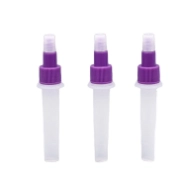

Every extraction tube that touches a clinical sample or enters a molecular diagnostics workflow must be sterile — but not all sterilization is created equal. The two dominant methods in the medical consumables industry, Ethylene Oxide (EO) gas sterilization and Gamma irradiation, offer fundamentally different trade-offs in penetration, processing speed, material impact, and regulatory handling. Choosing the wrong method can degrade tube performance, introduce toxic residues, or add unnecessary cost to your supply chain.
This guide breaks down the science, cost structure, and practical implications of each method — so you can make an evidence-based decision whether you're a diagnostic kit manufacturer, a lab procurement manager, or an OEM partner sourcing extraction tubes at scale.
How Ethylene Oxide (EO) Sterilization Works
EO sterilization uses a reactive gas — ethylene oxide — to destroy microorganisms by alkylating their DNA and proteins. The process typically runs at low temperatures (30–60°C) inside a sealed chamber, making it ideal for heat-sensitive plastic components. A typical EO cycle includes preconditioning (humidity and temperature adjustment), gas exposure (2–6 hours), and aeration (12–72 hours to dissipate residual gas). According to the FDA, approximately 50% of all sterile medical devices in the United States are sterilized using EO, underscoring its dominance in the industry.
For extraction tubes made from polypropylene (PP), polyethylene (PE), or LDPE — the most common materials in the extraction consumables market — EO penetrates complex geometries effectively, reaching internal filter membranes, dropper channels, and snap-cap recesses that surface-only methods cannot.
How Gamma Irradiation Sterilization Works
Gamma sterilization uses high-energy photons emitted from a Cobalt-60 source to disrupt microbial DNA. Unlike EO, it requires no gas, no chemicals, and no aeration time. Products are exposed to a calibrated radiation dose (typically 25 kGy for medical devices, per ISO 11137) while moving through the irradiation chamber on a conveyor system. The entire process is fast — often completed within hours — and leaves no chemical residue whatsoever.
Gamma irradiation is particularly favored for disposable, single-use extraction tubes destined for rapid antigen test kits, where high throughput and zero residue concerns are paramount. Its deep penetration means sealed final packaging can be sterilized in bulk without opening individual units.
Head-to-Head Comparison: 8 Critical Factors
- Temperature Sensitivity: EO operates at 30–60°C, safe for all medical plastics. Gamma generates minimal heat but can cause molecular chain scission in some polymers, potentially affecting PP clarity and mechanical strength over time.
- Chemical Residues: EO leaves residual ethylene oxide and ethylene chlorohydrin that must be aerated below ISO 10993-7 limits (≤4 mg EO, ≤9.4 mg ECH per device). Gamma leaves zero chemical residue.
- Processing Time: EO requires 14–72 hours including aeration. Gamma is complete in 2–8 hours with no post-processing.
- Penetration Depth: Both methods offer excellent penetration. EO gas reaches internal cavities; gamma photons penetrate sealed cartons up to 1.5 meters deep.
- Material Impact on PP/PE: EO causes negligible material degradation. Gamma at standard doses (25 kGy) can cause yellowing in some PP formulations and reduce elongation-at-break by 5–15%.
- Regulatory Footprint: EO is governed by ISO 11135; gamma by ISO 11137. Both are well-established with FDA, CE, and global regulatory acceptance.
- Cost Structure: EO has lower capital equipment costs but higher per-cycle expenses (gas, aeration time, environmental controls). Gamma has higher upfront infrastructure costs but lower per-unit costs at high volumes.
- Environmental Concerns: EO is classified as a carcinogen by IARC; facilities must comply with EPA emission standards. Gamma uses radioactive Cobalt-60, requiring nuclear regulatory oversight and source replenishment every 5–7 years.
Which Method for Which Application?
The optimal choice depends on your extraction tube type, downstream assay sensitivity, and production volume. Here's a practical decision framework:
- DNA/RNA Extraction Tubes (Spin Columns): EO preferred. These tubes contain silica membranes and multi-layer filters that are sensitive to radiation-induced degradation. EO's low-temperature process preserves membrane binding capacity and ensures consistent nucleic acid yields.
- Rapid Antigen Test Extraction Tubes: Gamma preferred. High-volume, low-cost production benefits from gamma's speed and zero-residue profile. The simpler tube geometry (dropper + buffer chamber) tolerates gamma doses well.
- Clinical Sample Extraction Tubes: Either method works. The choice depends on material grade and buyer preferences. PP tubes with stabilizer additives handle gamma well; standard PP tubes may benefit from EO.
- OEM/Contract Manufacturing: Offer both options. Diagnostic kit manufacturers increasingly require validated data for both methods. Having dual-validated sterilization gives you a competitive sourcing advantage.
The Residue Question: Does EO Affect PCR Results?
This is one of the most frequently asked questions in extraction tube procurement. The short answer: properly aerated EO-sterilized tubes do not interfere with PCR. However, tubes that have not completed the full aeration cycle — or those stored in sealed environments that prevent residual off-gassing — can retain ethylene oxide at levels that potentially inhibit enzymatic reactions. This is why aeration validation and lot-level EO residue testing (per ISO 10993-7) are non-negotiable quality checkpoints.
Gamma-sterilized tubes eliminate this concern entirely, which is why some high-sensitivity molecular biology labs specify gamma-only sourcing for tubes entering NGS (next-generation sequencing) workflows where even trace contaminants can introduce bias.
Cost Analysis for B2B Buyers
At volumes below 500,000 units per order, EO sterilization typically adds $0.005–$0.015 per tube to the manufacturing cost. Gamma sterilization at similar volumes costs $0.003–$0.010 per tube but requires batch coordination with an irradiation facility (most extraction tube manufacturers outsource gamma processing). At volumes exceeding 2 million units, gamma's per-unit cost advantage becomes significant — 30–40% lower than EO — because the fixed throughput capacity of gamma conveyors handles large batches efficiently.
The sterilization method you choose is not just a quality decision — it's a supply chain architecture decision that affects lead times, inventory holding costs, and downstream assay compatibility.
How to Evaluate Your Supplier's Sterilization Capabilities
- Request the sterilization validation report (EO: ISO 11135; Gamma: ISO 11137) — this should include bioburden testing, dose mapping, and sterility assurance level (SAL) of 10⁻⁶.
- Ask for lot-level EO residue certificates if using EO-sterilized tubes for molecular biology applications.
- Verify whether the supplier performs sterilization in-house or outsources — in-house control typically results in faster lead times and tighter quality feedback loops.
- For gamma-sterilized tubes, request material compatibility data showing mechanical and optical property retention after irradiation.
- Confirm shelf-life validation under the specified sterilization method — properly sterilized tubes should maintain sterility for a minimum of 2 years when stored per label instructions.
Need Extraction Tubes for Your Lab?
Get a personalized quote from our team for OEM/ODM service, custom specifications, and bulk pricing.